| Description: |
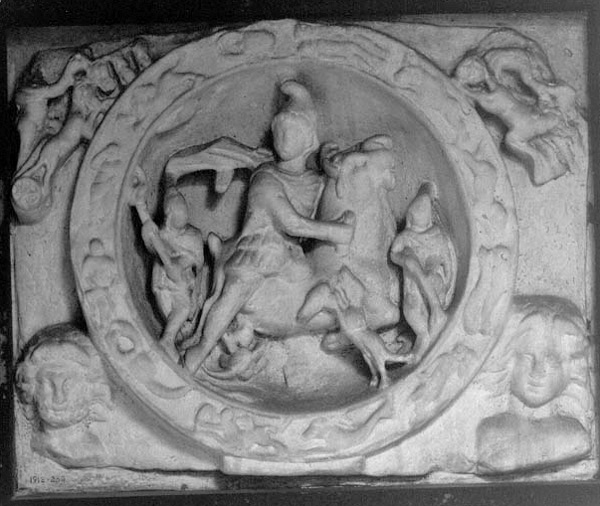
Walbrook Mithraeum, London. Museum of London. H. 0.53m. Marble zodiacal tauroctony. Mithras slays the bull, accompanied by Cautes and Cautopates, within the wheel of the zodiac, representing the cosmos. At the top left, outside the wheel, Sol-Helios ascends the heavens in his biga; Luna descends in her chariot at the top right. The heads of two wind-gods are placed bottom left (Boreas) and right (Zephyros). Inscription: Ulpius Silvanus Factus / Arausione Emeritus / Leg(iones) II Aus(ustae) / Votum Solvit. ('Ulpius Silvanus, veteran of the Second Legion Augusta, fulfilled his vow having become (a Mithraist) at Orange.') |
| Discussion: |
Mithraism in the west is known through the sculptural record, which is extensive due to the mithraea being located underground or in caves. Mithras was the Persian god of light, and his mystery cult proved enormously popular Empire-wide, especially amongst soldiers (see, for example, the temple at Carrawburgh on Hadrian's Wall). Tauroctonies (bull-slaying scenes) employed certain figures and symbols relating to the mystery cult. The celestial twins, Cautes (torch held upwards) and Cautopates (torch held downwards) represent life and death, light and darkness, and the spring and autumn equinoxes; they are basically an extension of Mithras himself, and may be associated with the Greek Dioskouri, Kastor and Polyde |